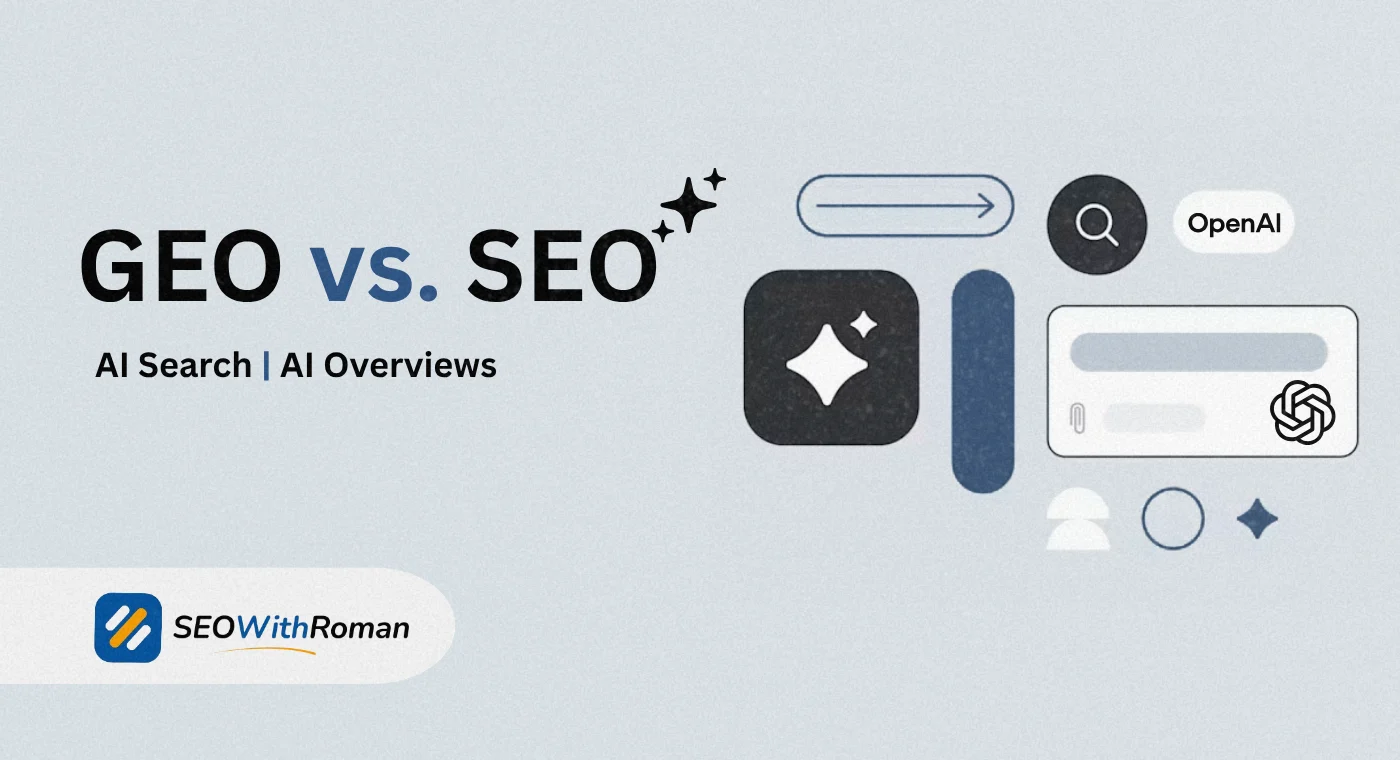
- SEO optimises your content to rank in traditional search engines like Google. GEO optimises your content to get cited in AI-generated answers from tools like ChatGPT, Perplexity, and Google AI Overviews
- According to Semrush research, AI Overviews now trigger for over 13% of all Google searches as of 2025, double the rate from January of the same year
- GEO and SEO share the same foundation: high quality, well-structured, authoritative content that genuinely helps the reader
- Zero-click searches are growing rapidly, meaning more users get their answers directly from AI without ever visiting a website
- The smartest 2026 strategy is not GEO or SEO. It is GEO and SEO working together as a unified visibility approach
1 What Is GEO vs SEO and Why This Question Matters More Than Ever in 2026
Two years ago, most digital marketers had never heard of GEO. Today it is one of the most important strategic questions any website owner, small business, or content creator needs to understand.
The reason is simple. The way people find information online is changing faster than at any previous point in search history. Google is no longer just a list of links. ChatGPT now answers questions that people used to type into a search bar. Perplexity cites sources and summarises answers in seconds. Google's own AI Overviews appear at the top of millions of search results, often answering the question before a single organic result is clicked.
In many years of working on SEO campaigns for B2B, CXM, and ecommerce websites targeting US and UK markets, I have never seen a shift as significant as the rise of AI-generated answers. And the website owners who are paying attention right now are the ones who will hold their traffic in 2027 and beyond.
This guide covers everything you need to understand about GEO vs SEO, the key differences, where they overlap, and exactly how to build a strategy that wins in both environments simultaneously.
2 What Is Search Engine Optimization | The Foundation You Already Know
Before comparing GEO vs SEO, it is important to define both clearly. Starting with SEO because it is the foundation that GEO builds on top of.
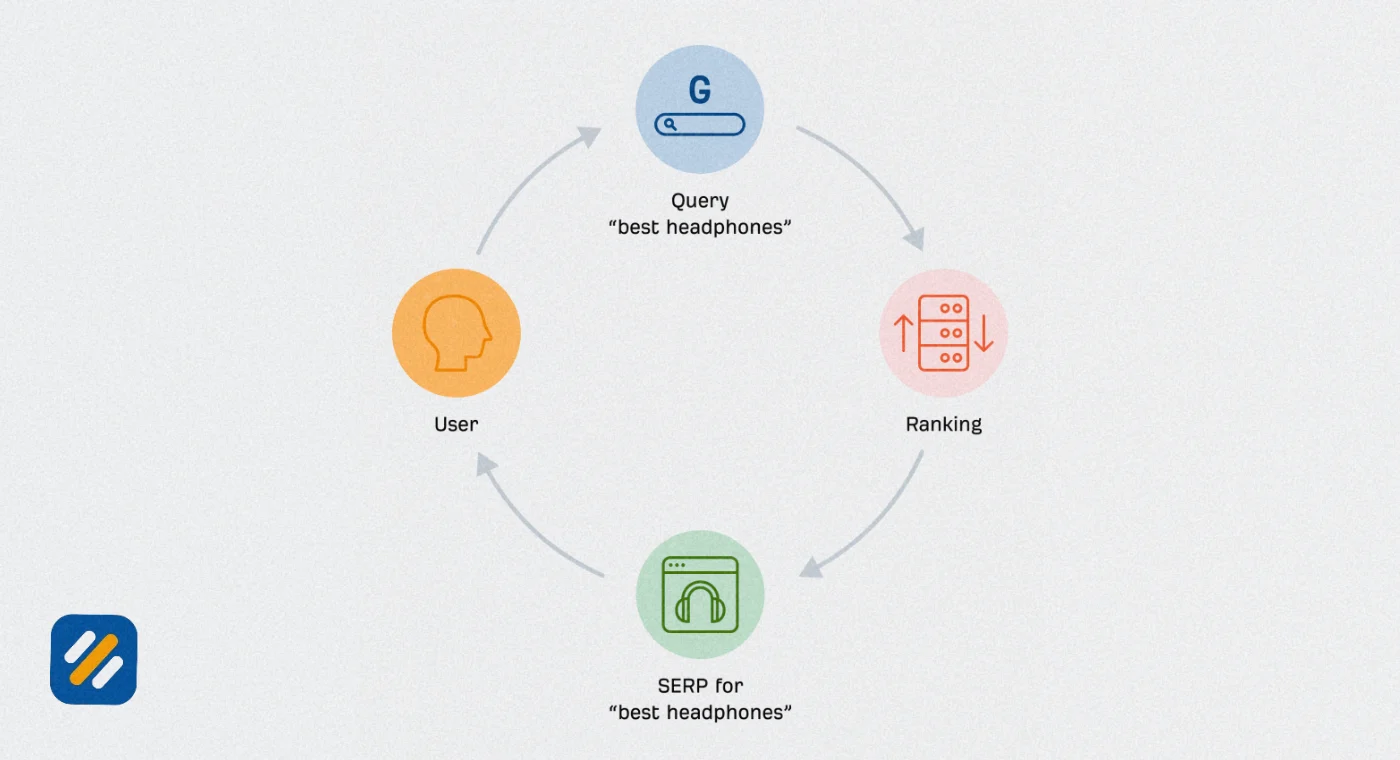
Search engine optimization is the process of improving your website and its content so that traditional search engines like Google and Bing rank it higher in their search results for specific keywords. The goal is organic search traffic, meaning visitors who arrive at your website by clicking a non-paid result on a search engine results page.
SEO works across three interconnected areas
On-page SEO covers everything on your actual webpage that signals relevance to a search query. Title tags, meta descriptions, heading structure, keyword placement, content depth, internal links, and image alt text all fall under on-page SEO.
Off-page SEO covers signals that come from outside your website, primarily backlinks from other trusted websites that tell Google your content is credible and worth recommending.
Technical SEO ensures search engine crawlers can access, read, and index your pages without obstacles. Site speed, mobile usability, sitemaps, canonical tags, and clean URL structures all belong here.
SEO has been the dominant digital marketing discipline for over two decades. It remains essential in 2026. But it is no longer the only game in town.
3 What Is Generative Engine Optimization | The New Discipline Rewriting the Rules
Generative engine optimization, commonly shortened to GEO, is the process of optimising your content so that AI-powered tools include, cite, or recommend it when generating answers to user questions.
Where SEO gets your page to appear as a link in search results, GEO gets your content woven into the actual answer that an AI generates. The difference in user experience is significant. A user searching on Google sees a list of links and chooses which to click. A user asking ChatGPT a question receives a synthesised answer that may reference your brand, quote your data, or recommend your product, without the user ever needing to click anywhere.
The AI tools that GEO targets include
- Google AI Overviews, which appear directly in Google search results above organic listings
- ChatGPT, which now has over 100 million weekly active users asking it questions they previously searched on Google
- Perplexity AI, which explicitly cites its sources and links to the pages it draws information from
- Google Gemini, which integrates AI answers into Google's search and productivity ecosystem
- Microsoft Copilot, which pulls information from Bing's index and generates synthesised responses
GEO is not a replacement for SEO. It is a parallel discipline that targets a different kind of search visibility in a rapidly expanding part of how people find information online.
4 GEO vs SEO | The Complete Side by Side Comparison
Understanding the full scope of differences between GEO and SEO requires looking at them across multiple dimensions simultaneously. Here is the most comprehensive comparison available:
| Dimension | SEO (Search Engine Optimization) | GEO (Generative Engine Optimization) |
|---|---|---|
| Primary goal | Rank in Google and Bing organic results | Get cited or recommended in AI-generated answers |
| Target platforms | Google, Bing, Yahoo, DuckDuckGo | ChatGPT, Perplexity, Google AI Overviews, Gemini, Copilot |
| Query format | Short keyword-based searches | Longer conversational prompts and questions |
| Content output | A list of ranked links the user clicks through | A synthesised AI-generated answer that may reference your content |
| Success metric | Rankings, organic traffic, click-through rate | AI citations, brand mentions, share of voice in AI answers |
| Keyword strategy | Target specific search terms at defined volume and difficulty | Anticipate natural language questions users ask AI tools |
| Backlinks importance | Critical ranking factor | Indirect signal of authority that AI uses to evaluate credibility |
| Content freshness | Important for competitive topics, evergreen content holds rankings | More critical, AI tools prioritise recently updated accurate content |
| User click behaviour | Users click links to visit your page | Users often get the answer without clicking, zero-click pattern |
| E-E-A-T signals | Strong ranking factor for quality content | Critical for AI citation eligibility, AI tools evaluate author credibility heavily |
| Schema markup | Supports rich results and featured snippets | Helps AI parse structured data more accurately |
| Measurement tools | Google Search Console, Ahrefs, Semrush rank tracking | AI visibility trackers, brand mention monitoring, citation frequency tools |
| Timeline to results | 3 to 6 months for new websites | Faster citation potential but harder to measure consistently |
5 How AI Search Engines Actually Decide What to Cite
This is the section that most GEO guides skip over entirely. Understanding why an AI tool cites one source over another is essential to building content that earns those citations.
AI language models do not rank pages the way Google does. They are not looking for the page with the most backlinks or the best optimised title tag. They are generating an answer from patterns in their training data and, for tools like Perplexity and Google AI Overviews, from real-time retrieval of current web content.
Here is what AI search engines look for when deciding what to cite or reference:
Factual accuracy and specificity. AI tools consistently prefer content that contains specific facts, figures, dates, and named sources over content that makes general claims. An article that says "studies show AI Overviews appear in 13.14% of queries as of March 2025" is far more likely to be cited than one that says "AI Overviews are appearing more and more."
Context-independent clarity. AI tools often extract a sentence or paragraph from your content and use it out of context. If that excerpt does not make complete sense without the surrounding paragraphs, the AI may skip it entirely. Write every paragraph to stand alone as a useful statement.
Author credibility signals. LLMs evaluate who wrote the content. A named author with verifiable credentials, a professional bio, years of stated experience, and an online presence across LinkedIn and other platforms is more likely to be cited than anonymous content. This is where E-E-A-T and GEO directly overlap.
Structured formatting. Content that uses clear headings, bullet points, numbered lists, tables, and FAQ sections is significantly easier for AI to parse and extract useful information from. Walls of unformatted text are harder for AI systems to reliably cite.
Brand authority and off-site mentions. AI tools like ChatGPT are trained on vast amounts of web content. Brands and individuals that are mentioned frequently across reputable websites, forums, social media, and publications build a form of AI authority that influences how often they are cited in AI-generated answers.
6 Zero-Click Searches and AI Overviews | How They Are Changing Organic Search Traffic
One of the most discussed and misunderstood consequences of the GEO vs SEO shift is the rise of zero-click searches.
A zero-click search happens when a user types a query into Google and gets their answer directly on the search results page without clicking through to any website. This has always happened to some degree through featured snippets and knowledge panels. But the introduction and rapid expansion of Google AI Overviews has accelerated the zero-click trend dramatically.
Research from Bain and Company found that approximately 80% of users answer 40% of their queries without clicking a link. This number is expected to grow as AI Overviews appear for more query types.
For website owners and content creators, this creates a genuine tension. On one hand, appearing in an AI Overview means your content is being used to answer a question, which builds brand awareness and authority. On the other hand, if the AI answer fully satisfies the user's question, they have no reason to visit your website at all.
Here is how different content types are affected by zero-click searches
| Content Type | Zero-Click Risk Level | Why | What to Do |
|---|---|---|---|
| Simple factual definitions | Very High | AI answers these completely | Go deeper than definitions, add unique insight |
| How-to guides with multiple steps | Medium | AI summarises but users often click for full detail | Make your guide thorough enough that the summary feels incomplete |
| Product comparisons | Medium | AI gives recommendations but users verify before buying | Add specific pricing, user reviews, and purchase guidance |
| Original research and data | Low | AI cites the source, driving traffic back to you | Publish original studies and surveys regularly |
| Opinion and expert commentary | Low | AI cannot replicate personal perspective | Build a strong author voice and point of view |
| Local business content | Low | AI shows local results but users visit for contact details | Optimise for local SEO and Google Business Profile |
| Long-form comprehensive guides | Low | Summaries are incomplete, users click for full depth | Publish guides that are genuinely exhaustive on their topic |
The clear strategic takeaway is to shift your content investment toward types that cannot be fully satisfied by a short AI-generated summary. Original data, expert opinion, and genuinely comprehensive guides are the content formats most protected from zero-click erosion.
7 Where GEO and SEO Overlap | The Shared Foundation Both Require
Despite their differences, GEO and SEO share a large common foundation. This is the most important practical insight in this entire guide because it means the work you are already doing for SEO is not wasted in a GEO world. It is the starting point.
Here is where the two disciplines align completely
High quality content is non-negotiable for both. Google's algorithms and AI language models both evaluate content quality. Thin, shallow, or inaccurate content fails in organic search results and gets ignored by AI citation systems equally. The standard for content quality has never been higher than it is in 2026.
E-E-A-T signals matter for both. Google uses E-E-A-T as a quality evaluation framework for organic rankings. AI tools use similar signals when deciding which sources are credible enough to cite. A named expert with verifiable credentials and demonstrated real-world experience is trusted by both systems.
Structured content performs better in both environments. Clear headings, logical information hierarchy, bullet points, tables, and FAQ sections help Google understand your content structure and help AI systems parse and extract information accurately. Structuring content for humans makes it more usable for both Google and AI.
Topical authority builds visibility in both systems. A website that covers a topic comprehensively across many related articles builds topical authority that Google rewards with better rankings. The same depth of coverage signals expertise that AI tools use to evaluate citation-worthiness.
Original data and research performs exceptionally in both. Original statistics, survey results, and first-party research attract backlinks for SEO and become the specific factual sources that AI tools prefer to cite in their answers.
8 How to Build a GEO Strategy That Actually Gets You Cited by AI
Understanding GEO conceptually is not enough. Here is the practical implementation framework I use when optimising content for AI citation alongside traditional search visibility.
Step 1: Identify the prompts your audience asks AI tools
Traditional SEO starts with keyword research. GEO starts with prompt research. Think about the natural language questions your target audience asks ChatGPT or Perplexity. These are longer and more conversational than search keywords. "What is the best SEO strategy for a new website in 2026" is a GEO prompt. "SEO strategy new website" is the equivalent SEO keyword. Write content that directly answers the prompt version.
Step 2: Add a direct answer at the top of every article
AI tools look for context-independent, clear answers they can extract and use. Start every article with a two to three sentence direct answer to the main question the article addresses. This is also good practice for Google featured snippets, making it a dual benefit tactic.
Step 3: Include specific data with named sources
AI tools prefer content that can be verified. Replace general statements with specific figures. Instead of "AI search is growing fast," write "According to Semrush research, AI Overviews triggered for 13.14% of all queries in March 2025, double the rate from January 2025." Named sources with specific statistics are far more likely to be cited than paraphrased general claims.
Step 4: Add FAQ sections with concise direct answers
FAQ sections are one of the highest-value GEO content formats because they mirror exactly how users ask questions to AI tools. Write five to ten FAQ entries for every major article, with answers of two to four sentences each. Keep each answer self-contained so it reads correctly even when extracted from context.
Step 5: Build your author and brand presence across the web
AI tools evaluate credibility based on how a brand or author is discussed across the entire web, not just on your own website. Getting mentioned in industry publications, being active on LinkedIn, having a consistent presence across professional directories, and earning backlinks from respected websites all build the off-site authority that AI tools use to evaluate citation worthiness.
Step 6: Keep content current with regular updates
AI tools show a strong preference for recently updated content, even more so than traditional Google ranking algorithms. Review your most important articles every three to six months and update any statistics, examples, or outdated recommendations. Add a visible "Last Updated" date to every article so both humans and AI systems can verify recency.
9 How to Measure GEO Performance | The Metrics That Actually Matter
One of the biggest challenges with GEO is measurement. Traditional SEO metrics like keyword rankings and organic traffic are well-established and easy to track. GEO metrics are newer and require different approaches.
Here is what to track and how to track it
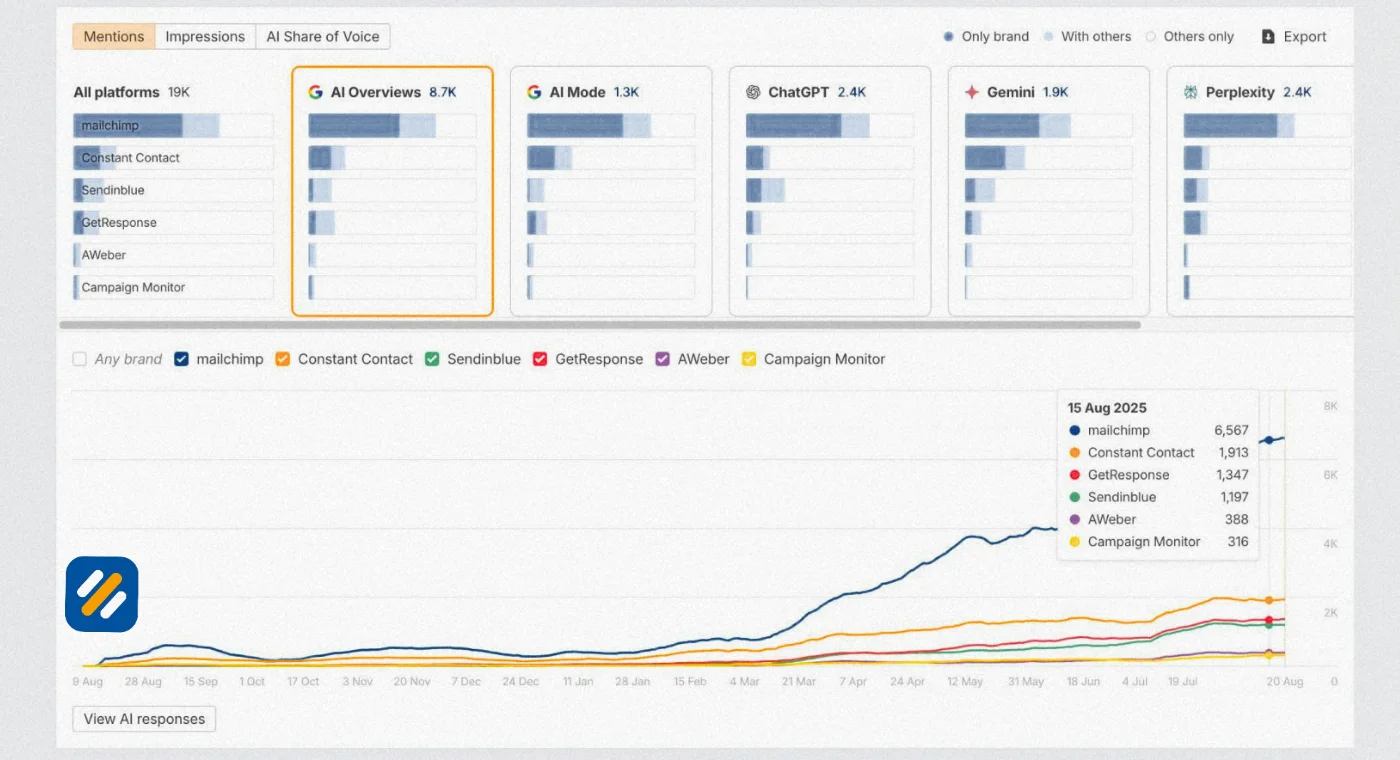
AI citation frequency: How often does your brand, website, or specific content appear in AI-generated answers? Tools like Semrush's AI Visibility Toolkit, Brandwatch, and Ahrefs' AI visibility features allow you to track how frequently AI tools mention or cite your content across multiple platforms.
Share of voice in AI answers: When users ask AI tools about your industry, product category, or area of expertise, what percentage of answers include your brand versus your competitors? This share of voice metric is the GEO equivalent of keyword ranking position.
Brand search volume trends: One of the indirect signs that your GEO strategy is working is an increase in branded searches on Google. When AI tools mention your brand in answers, users who want to learn more will then search your brand name directly. Tracking branded keyword impressions in Google Search Console reveals this indirect GEO effect.
Referral traffic from AI tools: Platforms like Perplexity explicitly link to the sources they cite. Monitor your website analytics for referral traffic from perplexity.ai and other AI platforms. This direct traffic from AI citations is the most concrete measurable GEO outcome currently available.
Content engagement quality: Track whether the visitors arriving from AI referrals engage more deeply with your content than average visitors. Higher average session duration, more pages per visit, and better conversion rates from AI-referred traffic indicate that GEO is delivering qualified, high-intent users to your website.
10 GEO vs SEO Strategy for Small Business Owners and Bloggers
Most GEO guides are written for enterprise marketing teams with dedicated AI visibility tools and large content budgets. Here is the practical GEO vs SEO strategy for a small business owner or personal brand blogger building their online presence from scratch.
The good news is that small websites have an inherent GEO advantage that large brands do not. Authenticity, specific personal expertise, and a genuine human voice are exactly what AI tools value when evaluating whether content is worth citing. A detailed guide written from real six-year professional experience is more valuable to an AI citation system than a generic 2,000-word article produced at scale.
Here is the small business GEO and SEO action plan
For SEO: Continue publishing keyword-targeted articles consistently. Focus on low-difficulty keywords under KD 30 for new websites. Build internal links connecting related content. Optimise every page with Rank Math before publishing. This builds the organic search foundation that GEO builds on top of.
For GEO: Add a direct answer paragraph to the top of every new article. Add a five to eight question FAQ section to every article. Include at least one specific statistic with a named source in every article. Make sure every article has a visible author name and bio. Update your three to five most important articles every quarter.
These additions take approximately fifteen to twenty minutes per article and give every piece of content you publish a genuine shot at both traditional organic rankings and AI citation inclusion.
11 3 Expert Tips to Win at Both GEO and SEO Simultaneously
These three tips go beyond what most guides cover and represent the tactical edge that separates websites that adapt successfully to the AI search era from those that lose traffic to it.
Expert Tip 1: Write for the Follow-Up Question, Not Just the Main Query
When AI tools answer a question, users often ask a follow-up question based on that answer. The websites that get cited repeatedly are the ones whose content covers not just the main topic but the natural follow-up questions around it. When writing any article, ask yourself what the reader will want to know next after reading each section, then answer it in the same article. This depth of coverage is what makes content genuinely useful to both human readers and AI citation systems.
Expert Tip 2: Treat Your Author Bio as an SEO and GEO Asset
Most website owners treat their author bio as an afterthought. In the AI search era it is one of the highest-value elements on your website. A detailed author bio with specific credentials, years of experience, named clients or industries worked with, and a link to a verified LinkedIn profile gives both Google and AI tools the E-E-A-T signals needed to treat your content as citable. Update your author bio with specific achievements and credentials every six months.
Expert Tip 3: Publish Original Data Even at Small Scale
You do not need to survey 10,000 people to produce original data. A case study from one client campaign, a before and after comparison from your own website's analytics, or a documented test of two different approaches all qualify as original research. These first-hand data pieces are the content type least likely to be bypassed by zero-click searches and most likely to be cited by AI tools because they contain information that cannot be found anywhere else on the internet.
12 Conclusion
The GEO vs SEO debate creates a false choice. The most effective digital marketing strategy in 2026 is not one or the other. It is both, built on the same foundation of genuine expertise, well-structured content, and consistent publishing.
SEO builds your organic search visibility in the traditional Google results that still drive the majority of web traffic. GEO builds your presence in the AI-generated answers that are rapidly growing as a new traffic source and brand awareness channel.
The tactics that make you good at SEO, including writing thoroughly, building authority, structuring content clearly, and demonstrating real expertise, are the same tactics that make you visible in AI-generated answers. You are not starting over. You are extending what already works into a new environment.
Start with your existing content. Add direct answer paragraphs. Add FAQ sections. Update your author bio. Include specific data with named sources. Publish consistently.
Do those things and your website will be visible where people are searching today and where they will be searching in 2027.
Have a question about how GEO or SEO applies to your specific website? Drop a comment below and I will answer it personally.
Join 1,000+ business owners and bloggers who get one actionable SEO tip every week — straight to their inbox. Free forever.
Get Free Weekly Tips →