- Google uses a multi-step process of crawling, indexing, and ranking to decide which websites appear in search results
- The Google search algorithm is not one single system but a combination of multiple algorithms working together simultaneously
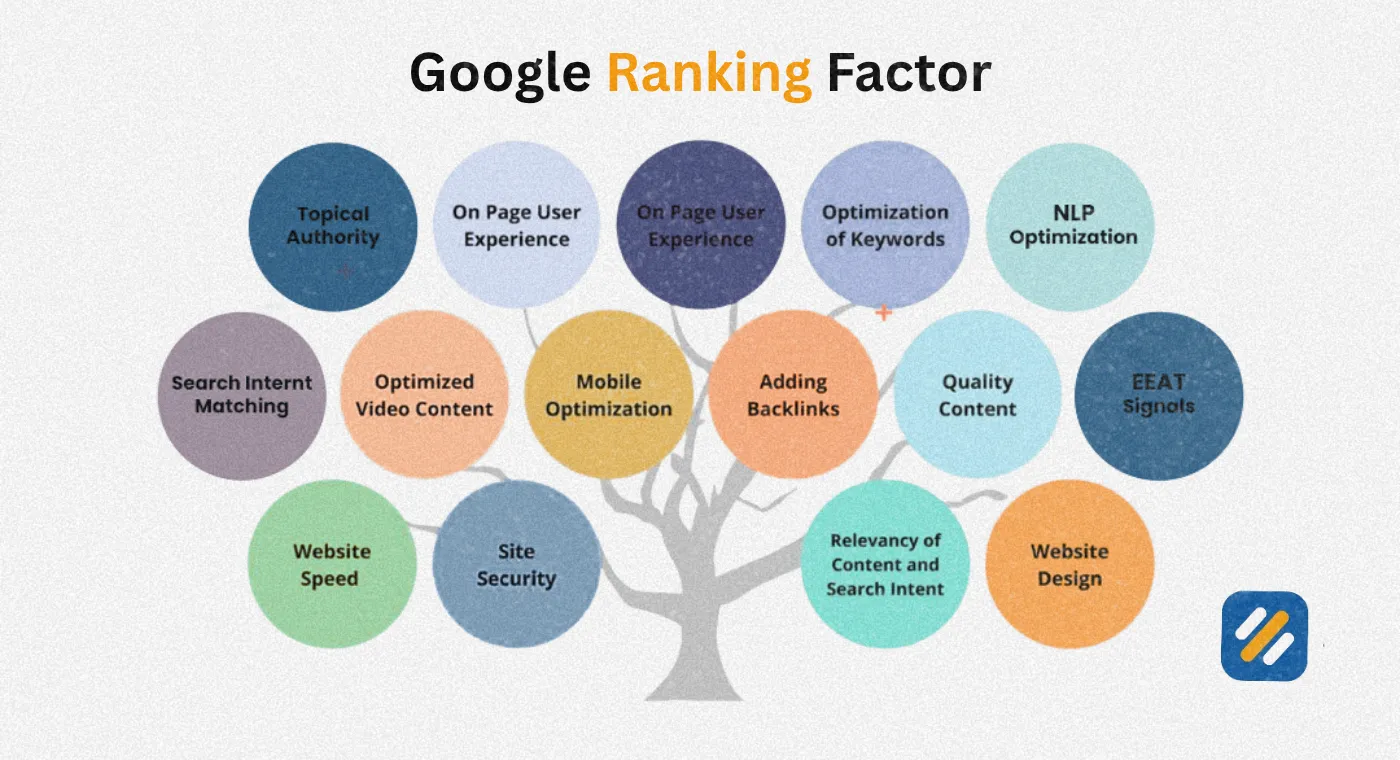
- Content relevance, E-E-A-T, backlinks, page experience, topical authority, and search intent are the six most powerful ranking factors
- Google personalises search results based on location, device type, search history, and language, meaning rankings are never identical for every user
- Algorithm updates like Panda, Penguin, Hummingbird, BERT, and the Helpful Content Update have permanently changed what it takes to rank
1 What Is the Google Search Algorithm and Why Should Every Website Owner Understand It
If you have ever published content and wondered why one page ranks on page one while another sits invisible on page five, the answer lives inside Google's search algorithm.
The Google search algorithm is the system Google uses to evaluate, compare, and rank billions of webpages every time someone performs a search. It processes hundreds of ranking signals in milliseconds and delivers an ordered list of results it believes best matches what the searcher needs.
Here is something most people misunderstand about the algorithm. It is not one single system. Google's algorithm is actually a collection of multiple algorithms that each handle a different aspect of search quality. Some evaluate content relevance. Others assess backlink quality. Some focus on page experience. Others detect spam and manipulation. All of them work together simultaneously on every single search query.
Google processes approximately 8.5 billion searches per day according to data from Internet Live Stats. Every one of those searches triggers this algorithm instantly, delivering personalised results within fractions of a second.
Understanding how this system works is not optional for anyone who wants organic traffic. It is the foundation of every SEO decision you will ever make. The websites that rank consistently are not the ones that got lucky. They are the ones that understood what Google rewards and built their entire content strategy around it.
In six years of working on SEO for clients across multiple industries, the single most consistent difference between websites that rank and websites that do not is not technical skill. It is understanding what Google is actually trying to accomplish and helping it do that job better.
2 How Does Google's Search Algorithm Work | The 3 Stage Process
Before Google can rank your website it has to complete three distinct stages. Most beginners understand the third stage but are completely unaware of the first two, which is exactly why their content never gets found.
Stage 1: Crawling
Crawling is how Google discovers content on the internet. Google employs automated programs called Googlebot or crawlers that continuously travel the web following links from one page to another. When Googlebot visits your website it reads your content, follows your internal links to discover other pages, and sends all of that information back to Google's servers.
Your website can help or hinder this process. A clear site structure, a properly configured sitemap submitted in Google Search Console, and no pages accidentally blocked in your robots.txt file all make crawling faster and more efficient. A cluttered site with broken links, redirect chains, and blocked pages forces Google to work harder and potentially miss important content entirely.
Stage 2: Indexing
Once a page has been crawled, Google decides whether to add it to its index. The index is Google's massive database containing copies of every webpage it has evaluated and deemed worth storing. Think of it as a library containing hundreds of billions of books.
Not every page that gets crawled gets indexed. Google may choose not to index a page if the content is thin or duplicated, if the page is blocked by a noindex tag, if the content quality does not meet its standards, or if the page has very few or no links pointing to it from other pages.
This is why SEO is not just about writing content. If Google does not index your page, it cannot rank it, regardless of how good the content is.
Stage 3: Ranking
When someone performs a search, Google does not search the live internet. It searches its index and runs the ranking algorithm to determine which pages from the index best answer that specific query, in that specific context, for that specific user.
The ranking stage is where the hundreds of individual signals Google evaluates all come into play simultaneously. The result is an ordered list of pages Google believes will best satisfy the searcher's intent.
| Stage | What Happens | What Can Go Wrong | How to Fix It |
|---|---|---|---|
| Crawling | Googlebot discovers your pages by following links | Pages blocked in robots.txt, no sitemap, broken internal links | Submit sitemap in GSC, fix crawl errors, improve internal linking |
| Indexing | Google decides whether your page belongs in its database | Thin content, duplicate pages, noindex tags, low quality signals | Write comprehensive content, remove duplicate pages, check meta robots tags |
| Ranking | Algorithm evaluates all indexed pages against a search query | Poor relevance, weak authority, bad page experience, low E-E-A-T | Optimise on-page SEO, build backlinks, improve site speed, demonstrate expertise |
3 The 8 Most Powerful Google Ranking Factors Explained With Real Examples
Google has confirmed it uses hundreds of signals to rank pages. But after many years of real client work and close study of what actually moves rankings, eight factors consistently make the biggest difference.
Ranking Factor 1: Search Intent Match
Search intent is the single most important ranking factor most beginners completely ignore. It refers to the underlying reason behind a search query. What does the person actually want to find?
Google categorises search intent into four types. Informational intent means the user wants to learn something. Commercial intent means they are researching before making a purchase. Transactional intent means they are ready to buy or take action. Navigational intent means they are looking for a specific website.
If someone searches "how does Google rank websites" they have informational intent. They want a clear explanation, not a product page or a service offering. Publishing a sales page targeting this keyword will never rank because the content format does not match what the searcher needs.
Before writing any article, Google the keyword and study the top five results. The format those pages use, whether guides, lists, definitions, or comparisons, is Google's clearest signal of what it considers the right answer for that intent.
Ranking Factor 2: Content Relevance and Depth
Relevance means your content directly answers the query. Depth means it answers it completely, covering not just the main question but every related question a searcher might have.
Google measures relevance by looking at where and how often your target keyword and related terms appear in your title tag, URL, H1, H2 headings, first paragraph, and body content. It also uses semantic analysis to understand whether your content covers the topic comprehensively.
The pages that rank for competitive keywords in 2026 are not just relevant. They are the most comprehensive answer to the query available on the internet. Shallow content that covers only the surface of a topic is consistently outranked by deeper content that leaves the reader with no unanswered questions.
Ranking Factor 3: E-E-A-T
E-E-A-T stands for Experience, Expertise, Authoritativeness, and Trustworthiness. Google added the first E for Experience in December 2022, reflecting a shift toward rewarding content created by people with real firsthand knowledge of the topic.
Experience means you have personally done what you are writing about. A guide to SEO written by someone who has managed real client campaigns for many years carries more experiential weight than the same guide written by someone who researched the topic online.
Expertise means you have deep knowledge in your field demonstrated through the accuracy, depth, and specificity of your content.
Authoritativeness means others in your industry recognise your knowledge, measured through backlinks, mentions, and citations from respected sources.
Trustworthiness means your website is safe, accurate, transparent about authorship, and honest with its readers.
For a personal brand blog, E-E-A-T is one of your biggest competitive advantages. Your name, your credentials, and your real client experience are trust signals that anonymous websites can never replicate.
Ranking Factor 4: Backlinks and Link Authority
A backlink is a link from another website pointing to one of your pages. Google interprets backlinks as votes of confidence. When a respected website links to your content, it tells Google your page is credible and worth recommending.
Not all backlinks carry equal weight. A single backlink from a highly authoritative website in your niche is worth more than fifty backlinks from random unrelated sites. Google evaluates the authority of the linking domain, the relevance of the linking page to your content, the anchor text used in the link, and whether the link was earned naturally or placed manipulatively.
Backlinks remain one of the most powerful and most difficult ranking factors to build quickly. For new websites, the most effective approach is publishing content so genuinely useful that other websites want to reference it naturally.
Ranking Factor 5: Page Experience and Core Web Vitals
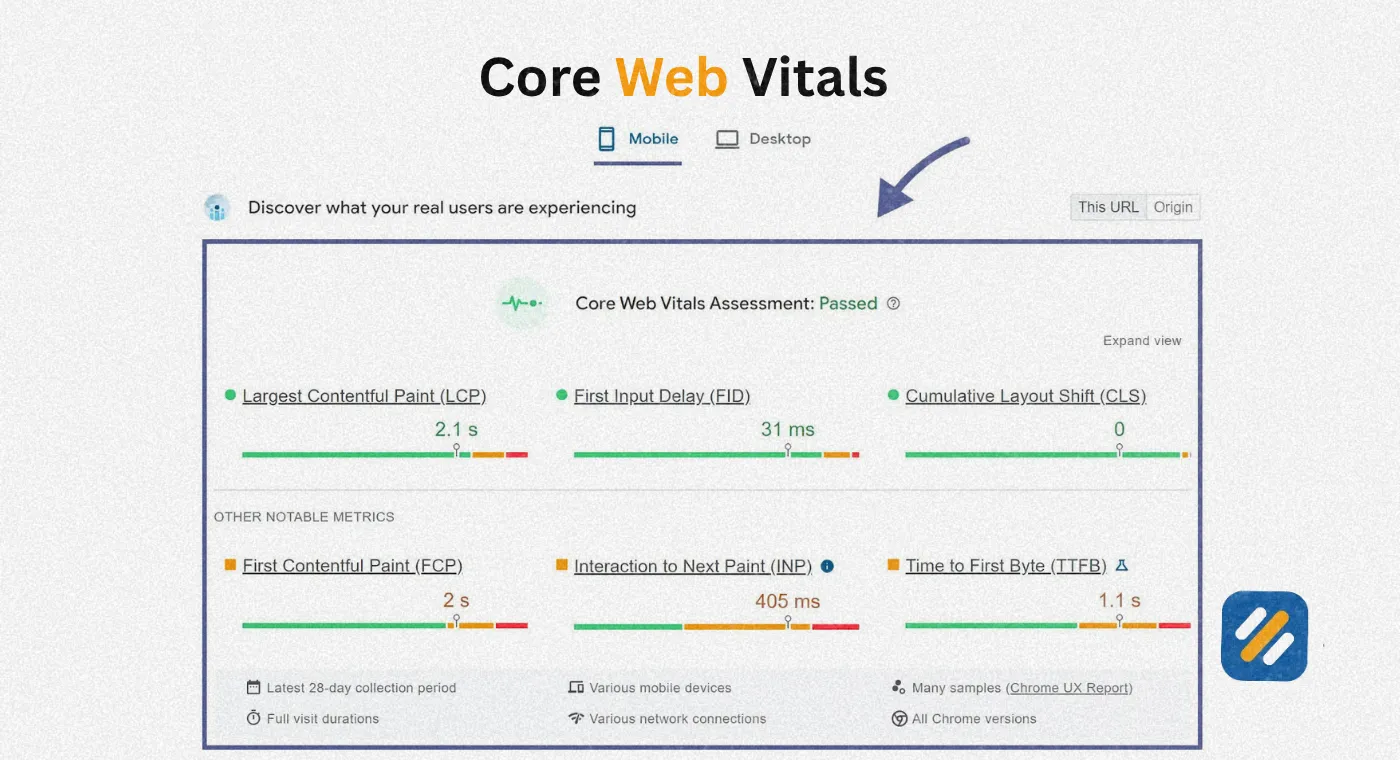
Google officially made page experience a ranking factor in 2021 through its Core Web Vitals update. This measures three specific technical performance metrics:
Largest Contentful Paint measures how quickly the main content of a page loads. Google considers anything under 2.5 seconds acceptable. Interaction to Next Paint measures how quickly your page responds to user interactions like clicks and taps. Cumulative Layout Shift measures whether page elements move around unexpectedly while loading, which creates a jarring experience for users.
Beyond Core Web Vitals, page experience also covers mobile usability, HTTPS security, and the absence of intrusive interstitials like pop-ups that block content immediately on page load.
Ranking Factor 6: Topical Authority
Topical authority is Google's assessment of how deeply your website covers a specific subject area. A website that publishes forty articles covering every angle of SEO for beginners builds topical authority in that niche far faster than a website publishing forty articles on forty unrelated topics.
Google rewards topical depth because it signals genuine expertise. A website that only has one article on SEO basics is harder for Google to trust on that topic than a website with thirty articles covering every aspect of SEO from beginner guides to advanced technical fixes.
This is exactly why the content plan for SEOWithRoman.com is built around six tightly defined categories rather than random topics. Concentrated topical coverage builds authority faster and more durably.
Ranking Factor 7: Freshness
For certain search queries, particularly those involving news, current events, software versions, and "best in year" searches, Google gives significant weight to how recently the content was published or updated.
A guide on "best keyword research tools in 2026" published in 2026 will consistently outrank an identical guide published in 2023 that has not been updated. Google can detect the publication date and last modified date of any page and factors this into rankings for time-sensitive queries.
For evergreen content like definitions and how-to guides, freshness matters less. But it is still good practice to review and update your most important articles at least once per year to maintain their competitive edge.
Ranking Factor 8: Personalisation and Context
Google does not show the same search results to every user for the same query. It personalises results based on several contextual signals:
Location changes results dramatically. Someone searching "best SEO specialist" in London sees different results than someone searching the same query in New York. Device type influences results because Google knows mobile users often have different needs and urgency than desktop users. Search history personalises results toward websites and content types the user has engaged with before. Language and regional settings adjust both the language and local relevance of results.
This personalisation means that rankings you see when checking your own website may not represent what your target audience actually sees. Always use incognito mode or a rank tracking tool when checking your real rankings.
4 Google Ranking Factors at a Glance | The Complete Reference Table
| Ranking Factor | Importance Level | What Google Measures | How to Improve Your Score |
|---|---|---|---|
| Search intent match | Critical | Format, depth, and angle of content vs searcher expectation | Study top 5 results before writing, match their format |
| Content relevance | Critical | Keyword placement in title, headings, body, URL, meta description | Use Rank Math to optimise every page before publishing |
| E-E-A-T signals | Very high | Author credentials, firsthand experience, site trustworthiness | Add author bio, cite sources, show real client examples |
| Backlinks | Very high | Quality, relevance, and authority of linking domains | Publish link-worthy content, do outreach, write guest posts |
| Core Web Vitals | High | LCP, INP, CLS scores measured by Google | Use WP Rocket, optimise images, fix layout shift issues |
| Topical authority | High | Depth and breadth of content coverage in your niche | Publish across all subtopics in your category systematically |
| Content freshness | Medium to high | Publication date and last modified date | Update key articles annually, add current year where relevant |
| Internal linking | Medium | How well pages are connected and how authority flows | Link every new article to at least 3 existing related articles |
| Mobile usability | High | Whether pages work correctly on mobile devices | Test every page in Google's Mobile Friendly Test tool |
| HTTPS security | Medium | Whether site uses SSL certificate | Install free SSL through your hosting provider |
| Personalisation | Variable | User location, device, language, search history | Cannot be directly controlled, focus on the other factors |
5 A Brief History of Major Google Algorithm Updates That Changed SEO Forever
Google updates its algorithm thousands of times per year. Most updates are minor and go unnoticed. But several major named updates over the past fifteen years have fundamentally changed what it takes to rank on Google. Understanding these updates helps you understand why certain SEO practices exist and why others have been abandoned.
| Update Name | Year Released | What It Targeted | Impact on SEO |
|---|---|---|---|
| Google Panda | 2011 | Low quality, thin, and duplicate content | Killed content farms and article spinning overnight |
| Google Penguin | 2012 | Manipulative link building and keyword stuffing | Made bought links and exact match anchor text dangerous |
| Google Hummingbird | 2013 | Conversational search and semantic understanding | Shifted focus from exact keywords to topic meaning |
| Google RankBrain | 2015 | AI-powered understanding of new and complex queries | Made user engagement signals more influential |
| Mobile Friendly Update | 2015 | Mobile usability of webpages | Made mobile optimisation a direct ranking factor |
| Google BERT | 2019 | Natural language understanding of search queries | Improved Google's ability to understand context and nuance |
| Helpful Content Update | 2022 | Content written primarily for search engines not people | Penalised sites with high volumes of SEO-first, reader-second content |
| March 2024 Spam Update | 2024 | Expired domain abuse, scaled content, and site reputation abuse | Removed thousands of low-quality AI-generated content sites from index |
The pattern across every major update is identical. Google consistently moves toward rewarding content that genuinely helps real people and penalising content that exists primarily to manipulate rankings. Every update makes that direction clearer and harder to game.
6 What Google Does NOT Use as a Ranking Factor
Just as important as knowing what Google does use is knowing what it does not use. Misinformation about Google ranking factors is rampant online and leads beginners to waste time on things that have zero impact.
Domain age does not directly help you rank: An older domain does not automatically outrank a newer one. What matters is the quality of content and authority built over time. A two-year-old website with fifty high-quality articles and genuine backlinks will consistently outrank a ten-year-old website with thin content and no links.
Keyword density is not a ranking factor: There is no magic percentage of keyword usage that unlocks better rankings. Using a keyword naturally where it belongs is all that is required. Forcing it into every paragraph signals poor writing quality, not relevance.
Social media shares do not directly influence rankings: Google has confirmed multiple times that social signals are not a direct ranking factor. However, content that gets widely shared tends to earn more backlinks naturally, which does influence rankings indirectly.
Word count alone means nothing: There is no minimum or ideal word count that Google prefers. A 500-word article that perfectly answers a simple query will outrank a 3,000-word article that repeats itself and adds no new value. Write as many words as the topic requires and not one more.
Domain authority scores from third-party tools are not used by Google: Metrics like Moz Domain Authority or Ahrefs Domain Rating are useful for comparing websites but Google does not use them in its algorithm. Google has its own internal systems for assessing domain trust that it has never publicly quantified.
7 How Google Ranks Websites for Local Searches | What Small Businesses Need to Know
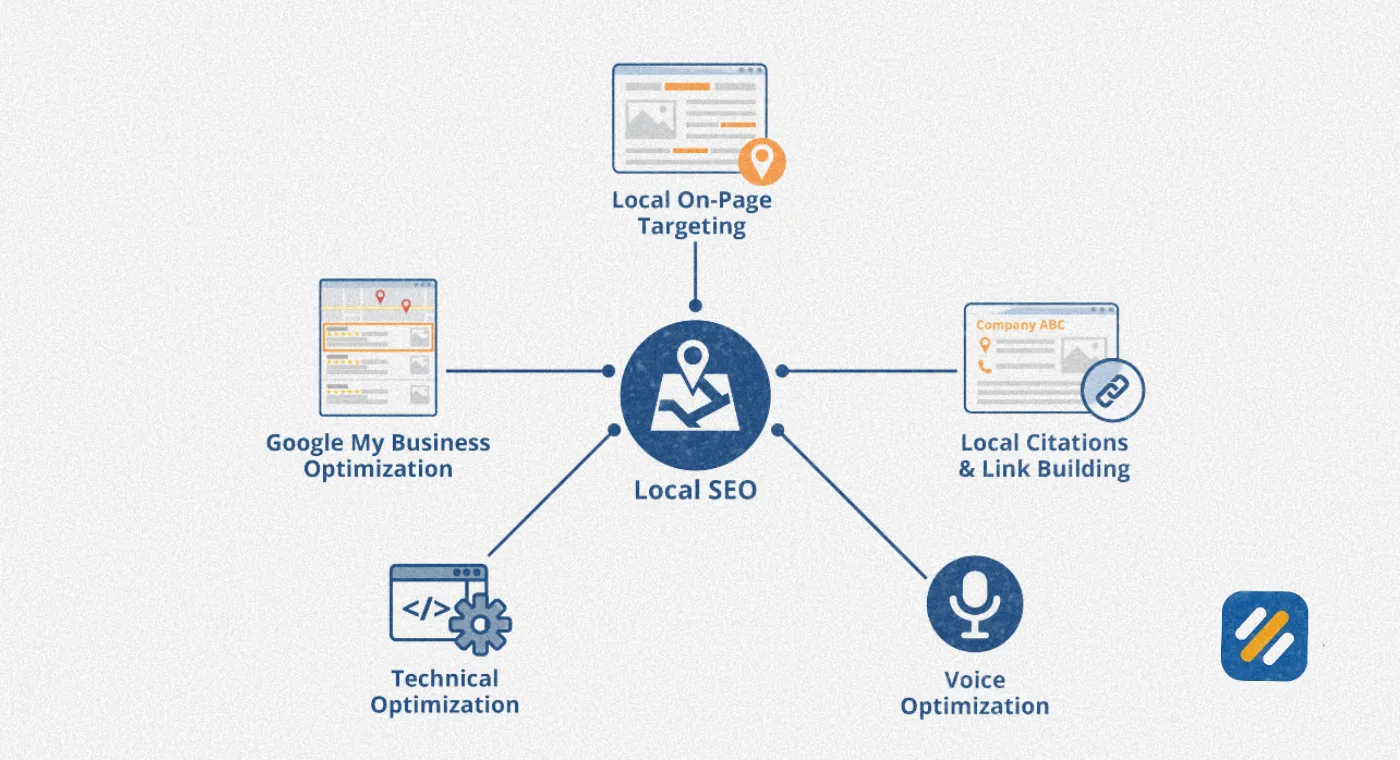
Local SEO is a distinct subset of the Google algorithm that determines which businesses appear in local search results and the Google Map Pack, the three business listings that appear at the top of local searches.
For small businesses targeting customers in a specific geographic area, local ranking factors are just as important as traditional organic ranking factors and in some cases more immediately impactful.
Google uses three primary factors to rank local businesses:
Relevance measures how closely a business listing matches what the searcher is looking for. A plumber listed as "Residential Plumbing Services" is more relevant to "plumber near me" than one listed simply as "Home Services."
Distance measures how far the business is from the searcher or the location specified in the query. Google gives preference to businesses physically closer to the searcher, all else being equal.
Prominence measures how well-known and reputable the business is, both online and offline. Google Business Profile reviews, the quantity and quality of those reviews, backlinks to the business website, and mentions of the business name across the web all contribute to prominence.
For any small business with a physical location or a defined service area, claiming and fully optimising a Google Business Profile is the single highest ROI local SEO action available. It is completely free, takes under two hours to complete properly, and can result in appearing in the Map Pack within weeks.
8 3 Expert Tips to Rank Higher on Google Faster
After six years of doing SEO for real clients, these are the three tips I wish every beginner understood from day one.
Expert Tip 1: Target the Middle of the Funnel First
Most beginners target either highly competitive informational keywords or transactional keywords their new domain cannot compete for. The fastest path to real traffic is middle-of-funnel keywords. These are comparison, consideration, and "how to choose" queries where the searcher is informed but not yet decided. Competition is lower, search intent is clearer, and conversion potential is higher than pure informational content.
Expert Tip 2: Update Before You Create
When traffic growth slows, most website owners instinctively publish more new content. The higher ROI move is almost always to update your existing content that is already ranking between positions 5 and 20. A page in position 8 that gets updated with better depth, fresher data, and stronger internal links can move to position 2 faster than any new article you publish. Google already trusts these pages. Give them a reason to move up.
Expert Tip 3: Match Your Content Format to the SERP Before Writing a Single Word
Before writing any article, Google your target keyword and study what format the top five results use. Are they numbered lists, step-by-step guides, comparison tables, video-first pages, or definition-led articles? Google is already showing you what format it considers the best answer for that query. Writing your article in a completely different format, no matter how good the content is, makes ranking significantly harder than it needs to be.
9 Conclusion
Google's ranking system is sophisticated but it is not mysterious. It is a system built around one core goal: giving searchers the most useful, trustworthy answer to their query as quickly as possible.
Every ranking factor, every algorithm update, and every quality guideline Google has ever published points in the same direction. Help real people. Demonstrate real expertise. Build real authority. Make your website genuinely pleasant to use.
The websites that rank on page one in 2026 are not there because they found a shortcut. They are there because they understood what Google was trying to accomplish and made it easier for Google to trust them with page one visibility.
Start by understanding your reader's search intent. Write content that fully answers their question. Demonstrate your expertise honestly. Build your authority consistently over time.
Do those four things without shortcuts and Google will do exactly what it is designed to do: find your content, index it, and show it to the people searching for exactly what you offer.
Have a question about how Google decides to rank your website? Drop it in the comments below and I will answer it personally.
Join 1,000+ business owners and bloggers who get one actionable SEO tip every week — straight to their inbox. Free forever.
Get Free Weekly Tips →