- Meta keywords are HTML tags that were originally used to tell search engines what a page was about
- Google officially stopped using the meta keywords tag as a ranking factor in 2009 and has not changed this position since
- Using meta keywords today can actually expose your keyword strategy to competitors who can read your source code
- Bing may treat excessive meta keywords as a spam signal, making them potentially harmful rather than neutral
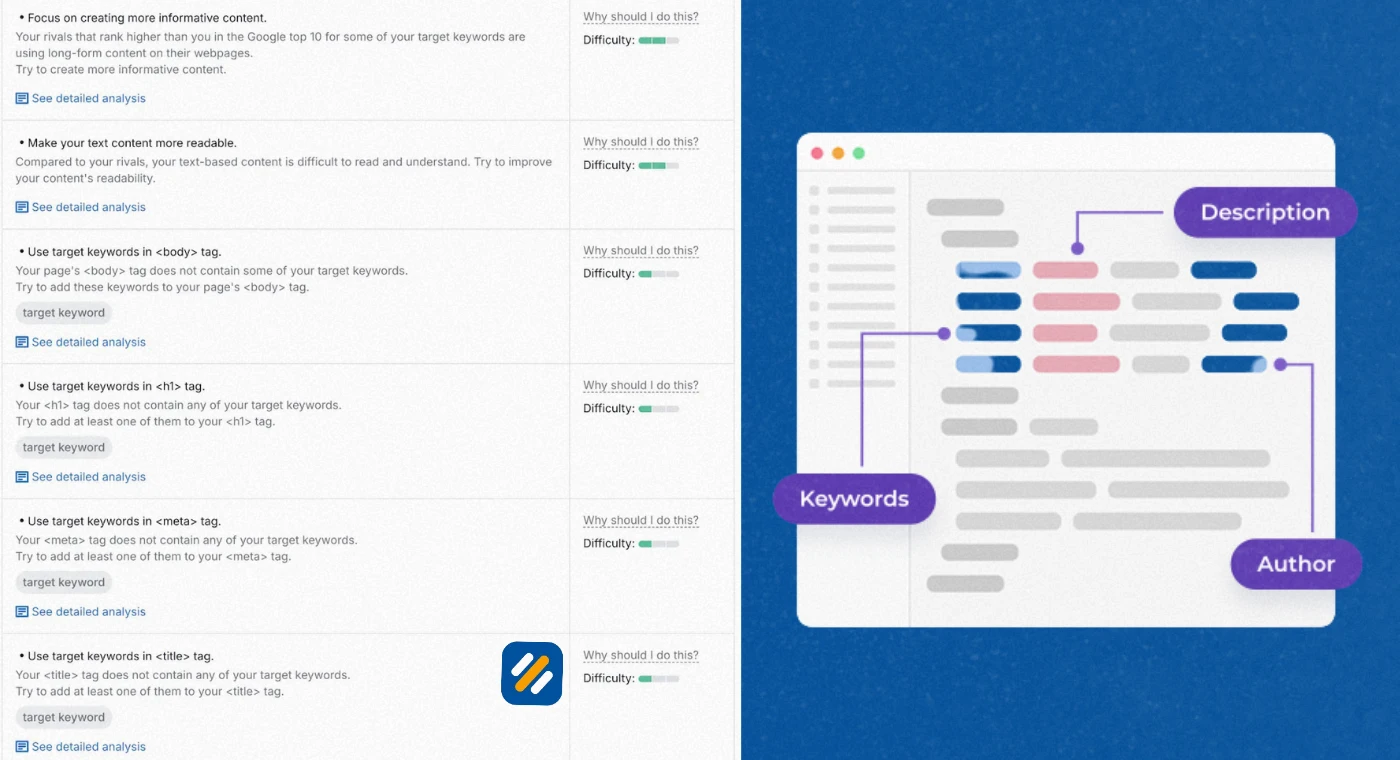
- The SEO keywords that actually move rankings in 2026 belong in your title tag, H1, body content, meta description, and image alt text
1 What Are Meta Keywords in SEO | The Complete Definition
If you have been researching on-page SEO for any length of time, you have probably come across the term "meta keywords" and wondered whether you should be using them on your website.
The short answer is no. But understanding why requires knowing what they are, where they came from, and what went wrong with them. That context is what most articles on this topic skip, and it is exactly what this guide covers in full.
Meta keywords are a specific type of HTML meta tag that website owners used to add to their pages to tell search engines which keywords the page was targeting. They live in the head section of a webpage's HTML code and are invisible to regular visitors. Only search engine crawlers and anyone who views the page source code can see them.
The meta keywords tag looks like this in HTML:
meta name="keywords" content="SEO tips, keyword research, on-page SEO, meta tags, SEO for beginners"
This tag was placed in the head section of every page alongside other meta tags like the meta description and the title tag. The idea was straightforward. You write a page about keyword research, you add "keyword research" to your meta keywords tag, and Google knows to rank you for that term.
It sounds logical. And from approximately 1995 to 2005, it actually worked. Then everything changed.
2 The History of Meta Keywords | How They Worked and Why They Failed
To understand why meta keywords no longer matter for Google SEO, you need to understand the era they were built for.
In the early days of the internet, search engines were primitive by today's standards. They could not read and understand page content the way modern algorithms do. They relied heavily on signals that webmasters provided directly, including meta keywords tags, to understand what a page was about.
This created an obvious problem almost immediately. If you could tell Google what to rank you for simply by adding words to a hidden tag, you could rank for anything regardless of whether your content actually deserved it.
Within a few years of meta keywords becoming standard practice, spammers and manipulative webmasters had completely abused the system. Pages with no relevant content were stuffing hundreds of keywords into their meta keywords tags and outranking genuinely useful pages for important search queries.
Google's response was to build algorithms sophisticated enough to read and understand actual page content. By the mid-2000s, Google's engineers had made the meta keywords tag essentially irrelevant to their ranking system. On September 21, 2009, Google's Matt Cutts made it official in a public video statement confirming that Google does not use the meta keywords tag in web search ranking at all.
That statement has never been reversed. Sixteen years later, it remains Google's official position.
3 Meta Keywords HTML | How to Write the Tag and What It Looks Like
Even though meta keywords no longer influence Google rankings, understanding the HTML structure is useful for two reasons. First, you may inherit a website that already has them and need to know what you are looking at. Second, understanding meta tag syntax helps you correctly implement the meta tags that do matter, particularly the meta description and title tag.
Here is the complete HTML structure of a meta keywords tag with a proper example
The tag sits inside the head section of your HTML document like this:
head
title How to Do Keyword Research for Free Step by Step /title
meta name="description" content="Learn how to do keyword research for free using Google Keyword Planner, Ahrefs, and AI tools. A step by step guide from a Senior SEO Specialist."
meta name="keywords" content="keyword research, free keyword research, keyword research tools, how to find keywords"
/head
The meta name="keywords" attribute identifies the tag as a keywords tag. The content attribute contains the actual keyword list, with individual keywords or phrases separated by commas.
There is no universally agreed limit on how many keywords you should include, which is part of why the tag was so easily abused. Some webmasters stuffed hundreds of keywords into a single tag. The absence of any technical restriction made keyword stuffing through meta tags extremely common in the early SEO era.
4 Do Meta Keywords Still Matter for SEO in 2026 | The Definitive Answer
This is the question every beginner asks and deserves a completely clear answer with no ambiguity
For Google search rankings: No. Meta keywords have zero influence on your Google rankings. Google's official documentation explicitly states that it does not use the keywords meta tag in web ranking. This has been the case since 2009 and nothing in Google's subsequent algorithm updates has changed this.
For Bing search rankings: Effectively no, with a risk attached. Bing's official position is that it does not use meta keywords as a ranking signal. More importantly, Bing has stated that excessive or manipulative use of meta keywords tags may be treated as a spam signal, which means using them aggressively could actively hurt your Bing rankings rather than help them.
For Yahoo: Yahoo uses Bing's search index, so the same applies.
For Yandex: Yandex, the dominant search engine in Russia, has historically treated meta keywords as a very weak ranking signal. If your website targets Russian-speaking audiences, meta keywords may have minimal relevance. For US and UK audiences targeting Google, this is irrelevant.
For Baidu: The dominant search engine in China probably does not use meta keywords based on available evidence. There is no official confirmation either way, but SEO practitioners targeting Baidu generally do not rely on meta keywords.
| Search Engine | Meta Keywords Stance | Risk of Using Them |
|---|---|---|
| Officially ignored since 2009 | Low risk, zero benefit | |
| Bing | Not a ranking signal, may flag stuffing as spam | Medium risk, zero benefit |
| Yahoo | Uses Bing index, same as Bing | Medium risk, zero benefit |
| Yandex | Very weak signal at best | Low risk, minimal benefit |
| Baidu | Probably not supported | Unknown risk, unclear benefit |
| DuckDuckGo | Uses Bing results, same as Bing | Medium risk, zero benefit |
The conclusion is the same regardless of which search engine you are targeting. Meta keywords offer no meaningful SEO benefit in 2026 and carry real risks if used excessively.
5 Why Using Meta Keywords Can Actually Hurt Your SEO Strategy
Most articles on meta keywords stop at "Google ignores them" and move on. But there are three specific ways that meta keywords can actively damage your SEO efforts that beginners rarely hear about.
Problem 1: You are handing your keyword strategy to competitors
Every meta tag on your website is visible in your page source code. Any competitor, any SEO tool, and any technically savvy person can right-click your page, select "View Page Source," and immediately see every keyword you have carefully researched and added to your meta keywords tag.
In many years of competitive SEO analysis, I have used competitors' meta keywords tags as a starting point for understanding their keyword strategy more times than I can count. If you are adding meta keywords to your pages, you are essentially publishing your keyword research for free.
Problem 2: Bing may penalise you for it
If you use meta keywords aggressively and a Bing algorithm update decides your tags look spammy, your Bing rankings could drop. While Bing represents a smaller share of search traffic than Google in most markets, US and UK small businesses still receive meaningful traffic from Bing. Risking those rankings for zero benefit makes no strategic sense.
Problem 3: It wastes time that could be spent on what actually works
Time is the scarcest resource any small business owner or blogger has for SEO. Every minute spent adding and maintaining meta keywords is a minute not spent writing better content, improving your title tags, building internal links, or earning backlinks. The opportunity cost of continuing to use meta keywords is real even if the direct damage is limited.
6 What Are Meta Tags | Understanding the Full Family
Because meta keywords are part of a larger family of HTML meta tags, understanding which ones actually matter helps you prioritise where to focus your on-page SEO efforts.
Meta tags are HTML elements that provide structured information about a webpage to search engines and browsers. They live in the head section of a page's HTML and are generally invisible to regular website visitors.
| Meta Tag | What It Does | Does It Affect Google Rankings |
|---|---|---|
| Title tag | Defines the clickable headline in search results | Yes, directly and significantly |
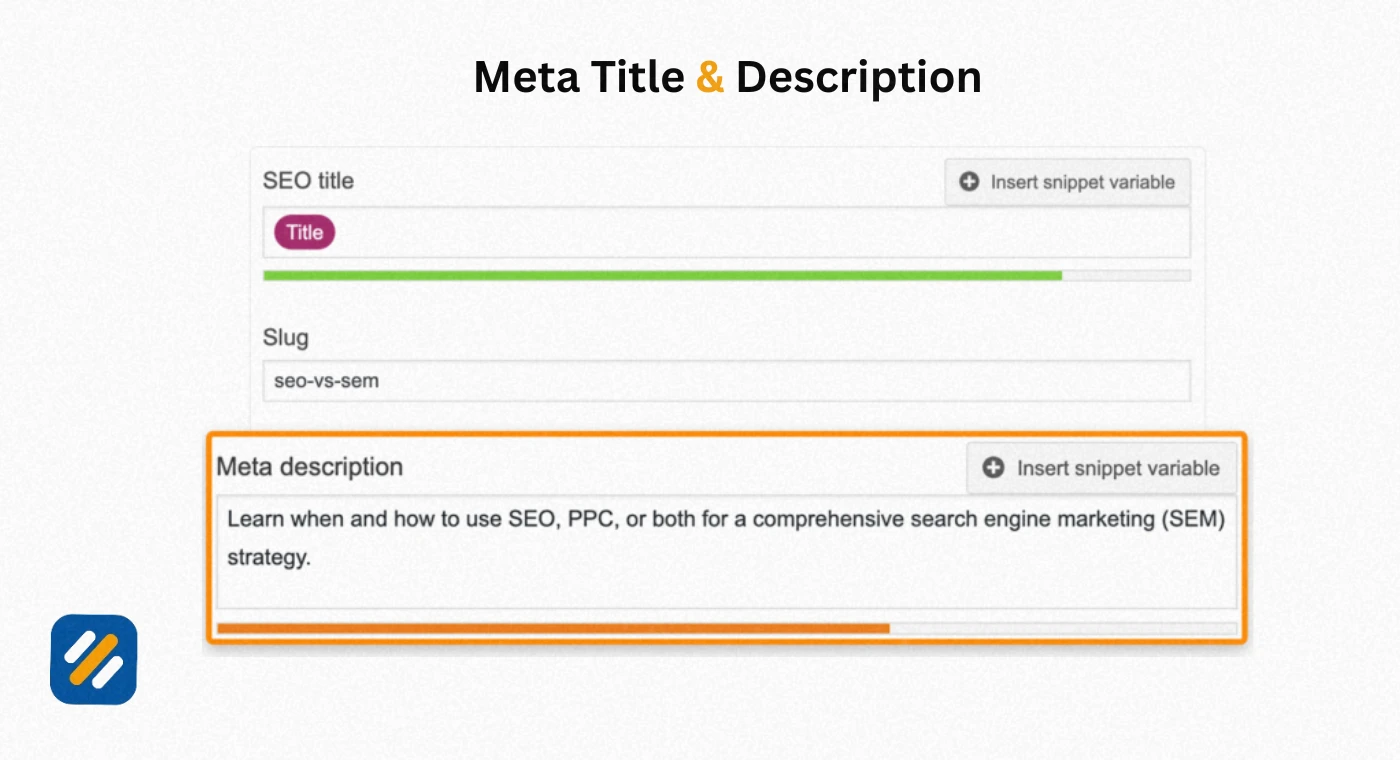
| Meta description | Defines the snippet text below the title in search results | Not directly, but affects click through rate |
| Meta robots | Tells Google whether to index a page and follow its links | Yes, critical for crawl and index control |
| Meta keywords | Lists keywords the page targets | No, Google ignores it completely |
| Meta viewport | Controls how the page scales on mobile devices | Indirectly, affects mobile usability scores |
| Meta charset | Defines the character encoding of the page | No direct ranking effect |
| Open Graph tags | Controls how the page appears when shared on social media | No direct ranking effect |
| Canonical tag | Tells Google which version of a page is the preferred one | Yes, critical for duplicate content management |
The meta tags that genuinely move rankings in 2026 are the title tag, meta robots tag, and canonical tag. The meta description does not directly affect rankings but has a measurable effect on click through rate, which influences how much organic traffic you actually receive.
7 How to Implement Meta Keywords in WordPress | And Why You Should Skip This Step
If you are using WordPress with Rank Math or Yoast SEO, you may have noticed that neither plugin prominently features a meta keywords field. This is intentional. Both plugins removed or deprioritised the meta keywords field years ago specifically because it has no SEO value.
Rank Math does allow you to add meta keywords through an advanced settings panel, but it clearly labels this as a legacy feature with no ranking benefit. Yoast SEO removed the meta keywords field from its standard interface entirely in version 6.0 released in 2018.
If you want to add a meta keywords tag to a WordPress page anyway, the process is:
In Rank Math: Open the Rank Math meta box on any post or page, go to the Advanced tab, and look for the Keywords field. Add your comma-separated keywords and save.
In Yoast SEO: The field is no longer in the standard interface. You would need to add it manually through a custom HTML snippet in your theme's header file or through a separate plugin.
My genuine recommendation after symanyars of real client SEO work: do not bother with either approach. Spend that time writing a better title tag and meta description instead. The return on investment is incomparably higher.
8 Where SEO Keywords Actually Belong in 2026
If meta keywords do not help your rankings, where should your target keywords actually go? This is the practical question that matters, and it is where most of your on-page SEO effort should be focused.
Title Tag
Your primary keyword should appear in the title tag as close to the beginning as possible. Google gives significantly more weight to keywords appearing early in the title. "Keyword Research Guide" outranks "A Beginner's Guide to Keyword Research" if all other factors are equal, because the keyword leads.
H1 Heading
Your page should have exactly one H1 heading and it should contain your primary keyword naturally. The H1 is one of the strongest on-page signals Google uses to understand what a page is primarily about.
First 100 Words of Body Content
Getting your primary keyword into the opening paragraph of your article tells Google immediately what the page covers. Do not bury it three paragraphs down. Introduce the keyword naturally within the first sentence or two.
Subheadings (H2 and H3)
Secondary keywords and related phrases belong in your H2 and H3 headings throughout the article. This builds semantic relevance and helps Google understand the full topical coverage of your content.
Body Content at Natural Density
Aim for a primary keyword density of approximately 1% across the full article. This means using a 1,500 word article would contain the primary keyword roughly 15 times. More than this risks keyword stuffing. Less than this may reduce relevance signals.
Meta Description
Including your primary keyword in the meta description does not directly improve rankings but Google bolds the keyword in the search result snippet when it matches the search query, which increases visual prominence and click through rate.
Image Alt Text
Every image on your page should have a descriptive alt text that naturally includes relevant keywords where appropriate. Alt text serves two purposes: it helps visually impaired users understand image content through screen readers, and it gives Google additional keyword context for the page.
URL Slug
Your page URL should contain your primary keyword in a clean, readable format. yoursite.com/meta-keywords-seo is better than yoursite.com/post-1247 for both Google and for users reading the URL in search results.
9 Meta Keywords vs Meta Description vs Title Tag | The Comparison Every Beginner Needs
One of the most common points of confusion for beginners is understanding the difference between meta keywords, meta descriptions, and title tags. All three are meta elements but they serve completely different purposes and have completely different impacts on your SEO.
| Element | Visible to Users | Visible to Google | Ranking Impact | Priority Level |
|---|---|---|---|---|
| Title tag | Yes, in search results and browser tab | Yes | High, direct ranking signal | Critical, optimise on every page |
| Meta description | Yes, as snippet text in search results | Yes, but not a ranking factor | Indirect via click through rate | High, write carefully for every page |
| Meta keywords | No, only in source code | Yes, but completely ignored | None | Zero, skip entirely |
| H1 heading | Yes, as main page headline | Yes | High, strong relevance signal | Critical, one per page with primary keyword |
| Image alt text | No, only for screen readers | Yes | Medium, image search and page relevance | Important, add to every image |
The simplest way to remember this: title tags and H1 headings move your rankings. Meta descriptions move your clicks. Meta keywords move nothing.
10 3 Expert Tips on Meta Keywords and On-Page SEO Every Beginner Should Know
Tip 1: Audit Your Existing Website for Meta Keywords Tags and Remove Them
If your website was built before 2015 or you inherited it from a previous developer, there is a good chance meta keywords tags are already sitting in your page source code. Use Screaming Frog free version to crawl your site and export the meta keywords field. Remove any that exist, because even if they are not hurting you today, they are exposing your keyword strategy to every competitor who checks your source code.
Tip 2: Stop Confusing Meta Keywords With SEO Keywords
The term "meta keywords SEO" causes real confusion because beginners assume adding keywords to the meta keywords tag is the same as doing keyword SEO. It is not. Keyword SEO means placing your researched keywords in your title tag, headings, body content, and meta description. The meta keywords tag has nothing to do with effective keyword SEO in 2026.
Tip 3: Spend the Time You Would Have Wasted on Meta Keywords on Your Meta Description Instead
Most small business websites have weak, generic, or missing meta descriptions. A well-written meta description does not improve your ranking position but it significantly improves the percentage of people who click your result when it appears on page one. Improving your click through rate from 2% to 4% on a keyword with 1,000 monthly searches doubles your traffic from that keyword without moving a single ranking position. That is where your time belongs.
11 Conclusion
Meta keywords are one of the most misunderstood concepts in beginner SEO. They were a legitimate tool in a different era of the internet. They are a relic in 2026 that offers no benefit for Google rankings, carries real risks with Bing, and exposes your keyword strategy to every competitor who views your source code.
The good news is that the time you would have spent on meta keywords is much better spent elsewhere. Write a stronger title tag. Craft a meta description that makes people want to click. Use your researched keywords in your headings and body content where they genuinely influence rankings.
Every minute you spend on on-page SEO elements that actually matter compounds over time into better rankings, more traffic, and more revenue for your website.
If you found this guide useful or have a specific question about meta tags on your WordPress website, leave a comment below. I read and respond to every one.
Join 1,000+ business owners and bloggers who get one actionable SEO tip every week — straight to their inbox. Free forever.
Get Free Weekly Tips →